Achim Steiner
“Jobs aren’t just about money - they’re about dignity”

Achim Steiner, UNDP Administrator, stresses that jobs mean more than income—they’re about dignity and opportunity. From digital skills to green transitions, he highlights education, finance, and sustainability as the keys to tackling global unemployment and driving development.
Achim Steiner, what’s the connection between jobs and development?
It’s really about survival and livelihoods. Jobs are how people earn a living. When countries move from farming to industry to digital economies, they need to create enough jobs while also building people’s skills. If you don’t get this balance right, you end up with massive unemployment and social problems.
How does having a job change someone’s life?
Jobs aren’t just about money - they’re also about dignity. Look at what’s happening now in many developing countries: university graduates are working as secretarial staff or desperately trying to get low-paying government jobs. That’s because there aren’t enough good jobs in the formal economy. The digital skills you learn in school today basically determine whether you’ll have opportunities or be left behind. A young person needs to feel they have a future, not just survive day to day.
What happens when countries don’t have enough jobs?
Most People end up working in the informal economy - running small shops, selling things on the street. But then they don’t get healthcare, education support, or job training. The biggest problem is that young people can’t get loans to start businesses because banks won’t lend to them. Kenya has started to change this by creating new ways to finance young entrepreneurs. If you want to create jobs, you need three things: education, digital infrastructure, and access to money.
AI will eliminate many low-skill jobs. Where will new jobs come from?
Every new technology kills some jobs but creates others. Look at China - 30 years ago, parts of it were among the poorest places on earth. Now it’s a tech powerhouse. Same with India, which became the world’s software capital. In Africa, farmers can now get weather reports and market prices instantly on their phones, even in villages without electricity. Insurance companies can now offer cheap health insurance to poor people because AI helps them calculate and price risk better. The key is making sure everyone has access to these technologies, not just elites or rich countries.
In the Global North, we’ve fought for decent labour conditions for centuries. Do we need the same level of jobs in Africa to get started?
You cannot make it a precondition for starting a journey. It took Europe 200 years to industrialize. Remember what European factories looked like just 150 years ago. I’m not suggesting that Africa will follow that same pathway. But as job markets evolve, levels of income rise, and investments in social safety nets and education increase. Employees become fundamental assets to a company and to a national economy, and they need better conditions in which to thrive and be productive.
Aren’t we leaving behind the environment when we focus just on economic development?
That old idea that you have to choose between the economy and the environment is dead. Today, environmental destruction is the biggest threat to economic prosperity. Green transitions are the new job engine. Take the power sector. Two-thirds of all new electricity infrastructure built worldwide in 2024 was renewable - and it’s cheaper than fossil fuels. Which is why African countries are also becoming leaders in this transition. They desperately need access to clean and affordable electricity. Kenya already gets 90% of its power from renewables. China is racing ahead with green technology while still using fossil fuels. The problem is no longer technology - it’s that our banks and governments still favour old, dirty industries instead of clean ones.
Do we need a Global Jobs Index to help countries create better policies?
Very clearly yes. Numbers focus governments and the public on facts. When you can compare your country to neighbours with similar conditions, you start asking tough questions: why do they have more jobs than us? Politicians dislike being ranked low, so they actually try to improve. Data triggers public debate. The index is as much about informing public policymaking - experts, professionals, and those who design public policy - as it is about empowering the public to have a part and role in this debate. Indices like the Global Jobs Index inform and empower, or at least enable, a public debate that is as critical in the wealthiest economies today as it is in some of the poorest.
Interview by Till Wahnbaeck
November 15, 2025
About
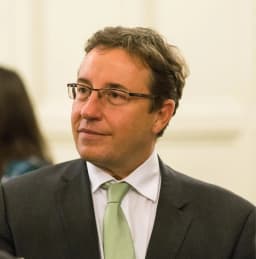
Achim Steiner
Achim Steiner
Achim Steiner is a German-Brazilian environmental politician and was the Administrator of the United Nations Development Programme (UNDP) from 2017 to 2025. Previously, he led the UN Environment Programme (UNEP) and has been internationally committed to sustainable development, climate resilience, and social justice for decades. Steiner studied in Oxford and London and is regarded as one of the most influential figures in global environmental and development policy.
More insights

Shiela Birungi, Head of Ventures, Impacc
“Startups are building Africa’s middle class”
Entrepreneurship and innovation will create the dignified jobs of the future that had historically been the reserve of government or corporates. Despite the disruption by AI, tech-enabled business models in labour-intensive sectors will create the jobs of the future.
2 min

Hans Rusinek, Labour researcher, consultant
“The gig economy is the working model of the future.”
Hans Rusinek explores the future of work, arguing the gig economy is here to stay. From side hustles to freelance networks, he shows how flexible, project-based jobs can empower workers—if stability and learning opportunities are secured alongside freedom.
2 min

Tobias Heidland, Professor of Economics about the Global Jobs Index
“The number of missing jobs is staggering.”
The Global Jobs Index reveals the massive gap between job seekers and decent jobs worldwide, especially in Africa where the population will add “an entire Europe every ten years.” Tobias Heidland highlights the urgent need for education, infrastructure, and job-friendly policies.
2 min