Hans Rusinek
“The gig economy is the working model of the future.”

Hans Rusinek explores the future of work, arguing the gig economy is here to stay. From side hustles to freelance networks, he shows how flexible, project-based jobs can empower workers—if stability and learning opportunities are secured alongside freedom.
Hans Rusinek, what is work today?
Work is much more than just an economic factor. It is the place where we come together with people we might not otherwise meet in our private lives. Friction arises, warmth arises – we fall in love at work, we experience self-efficacy. A society is built together through the shared workplace. Work is an important social place where we come together and learn to function with each other despite our differences.
What does a job do to a person psychologically?
Lottery winners have a higher suicide rate than those who don’t win. Unemployment is not only an economic problem, but also an existential one. Work does something to me: I give the world something I have made, and the world thanks me in return. It’s a deep need within us. In Catholic terms, work is part of being human. This existential level of work is a problem for millionaire heirs with no motivation to work as much as it is for people without work.
The ideal after the Second World War was a full-time job at Daimler until retirement. Is that still relevant today?
It’s not even relevant at Daimler anymore! The old full-time employment model with one employer for decades is out of date. We have to adjust to much shorter job cycles. Automation means that less and less industrial work is actually done by humans. Donald Trump wants stable employment for non-academic jobs. Where he is wrong: today, this no longer means working on an assembly line, but rather small-scale work, for example in the skilled trades.
The gig economy and side hustles characterise the modern world of work. How do you assess this development?
The project-based world of work, also known as the gig economy, is the idea of making the labour market more flexible through very demand-oriented work. A graphic designer, for example, can run several projects in parallel. It exists in very precarious situations, where my boss is an app and I deliver pizzas, but also in high-priced industries, such as law. Studies show that side jobs, known as ‘side hustles,’ can also have a positive effect on one’s main occupation. Those who have side jobs are not backed into a corner by their employer. New, different experiences allow knowledge to flow more freely.
Is this a model for the future of work?
Definitely. We are already seeing that more and more permanent positions are being reduced in Germany. There is a greater reliance on freelancers or temporary workers because employers can make their workforce more flexible in volatile times. There are strong technological and economic reasons for a gig economy. Contract work can now be regulated differently in the digital age. And in times of career networks, the employer’s network and brand can also be more easily regulated from the employee’s point of view.
How does the gig economy differ between privileged and precarious situations?
Ideally, the main job provides stability. In precarious situations, we see that none of the individual jobs really provide enough to live on. Incidentally, such an anchor of stability ensures that secondary jobs can become places of discovery, to put it in very privileged terms. This can be nicely translated into German as a ‘Standbein’ (mainstay) and a ‘Spielbein’ (play leg). Another important distinction is between formal and informal work. When project-based work takes place in an informal setting – no pension, no taxes, no employment contracts – then it is problematic.
What kind of jobs will the world need in the future?
The future does not belong to those who know, but to those who learn. Really sustainable jobs allow for constant learning - and thus for you to remain up to date. There are jobs that are well suited for this – freelance jobs, for example. Other jobs are less suitable and have poor prospects in dynamic times. Not all sustainable gigs are digital: we find them in delivery services or the classic ‘jack of all trades’ in the village as well.
Interview by Till Wahnbaeck
November 15, 2025
About
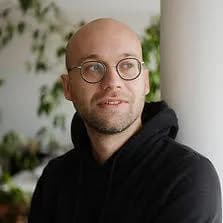
Hans Rusinek
Hans Rusinek
Hans Rusinek is a labour researcher, consultant and award-winning author. He teaches at the University of St. Gallen and focuses his research and practice on the future of work. His latest book, Work-Survive-Balance, addresses the question of how work can be made suitable for future generations and socially meaningful.
More insights
Achim Steiner, Administrator of the United Nations Development Programme(UNDP)
“Jobs aren’t just about money - they’re about dignity”
Achim Steiner, UNDP Administrator, stresses that jobs mean more than income—they’re about dignity and opportunity. From digital skills to green transitions, he highlights education, finance, and sustainability as the keys to tackling global unemployment and driving development.
2 min

Shiela Birungi, Head of Ventures, Impacc
“Startups are building Africa’s middle class”
Entrepreneurship and innovation will create the dignified jobs of the future that had historically been the reserve of government or corporates. Despite the disruption by AI, tech-enabled business models in labour-intensive sectors will create the jobs of the future.
2 min

Tobias Heidland, Professor of Economics about the Global Jobs Index
“The number of missing jobs is staggering.”
The Global Jobs Index reveals the massive gap between job seekers and decent jobs worldwide, especially in Africa where the population will add “an entire Europe every ten years.” Tobias Heidland highlights the urgent need for education, infrastructure, and job-friendly policies.
2 min