What has Latin America and Asia done right?
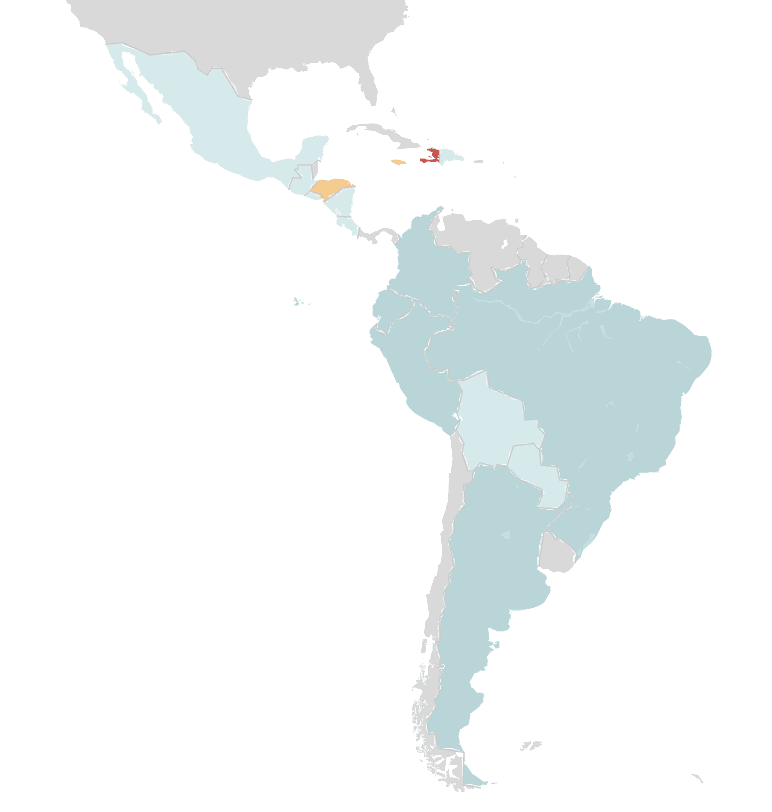
In recent decades, countries in Asia and Latin America in particular have succeeded in massively reducing their employment gaps. This success was not down to chance, but rather to institutional conditions and a number of key growth drivers.
In many countries in East Asia, job creation became a central development strategy. Countries such as South Korea, China, and Vietnam combined labor-intensive industrialization with consistent investment in education, infrastructure, and administrative capacity. The state provided infrastructure and established rules that allowed companies to grow and export to the global market. Millions of people moved from agricultural and informal work into productive, paid employment, which was the decisive lever for the historic decline in extreme poverty in East Asia.
Latin America achieved employment growth via a different route: growth plus active redistribution. Many countries combined employment growth driven by international demand for raw materials and agricultural products with social transfers, minimum wages, and education initiatives. This increased labor force participation rates, formalized work, and stabilized incomes even in times of crisis.
What these success stories have in common is that they have also boosted local demand, as residents now have more money to spend on their own consumption, which in turn fuels further economic growth and reduces dependence on exports.
The Evidence Shows: Job Growth Happens When Three Conditions Come Together:
- Economic and legal stability that enables investment
- State capacity that provides infrastructure, education, and legal certainty, and
- Open markets that create competition domestically and export opportunities.
Then work and entrepreneurship can become the engine for social advancement, and the employment gap will begin to close.
Highlights 2025

The employment gap
The world is missing over 350 million jobs
Since 2000, more than half a billion jobs have been created in the Global South. Nevertheless, there is still a global shortage of over 350 million jobs, but this figure is set to decline sharply almost everywhere in the future. Looking ahead, it is important to create jobs that not only serve as a step out of absolute poverty, but also provide a good livelihood for employees and their families.
2 min

Policy recommendations
What can Germany learn?
Job growth is the best way out of poverty and should be a key focus of German development cooperation. To achieve this, national governments must also prioritize jobs and thus economic development and entrepreneurship. Those that do so can become particularly rewarding partner countries.
2 min

The champions of tomorrow
Where will the next 100 million jobs be created?
By 2030, more than 100 million new jobs are expected to be created worldwide—almost 20 million per year. With around 75 million, most of these will come from Africa, driven by massive population growth and economic growth. In aging Europe, on the other hand, employment will fall by 7 million if unemployment rates remain stable.
3 min

Focus on impact
Which countries can make the biggest jumps with support?
Development aid often focuses on the biggest problems, and rightly so. The Global Jobs Index reveals the greatest opportunities: Which countries have managed to significantly close the employment gap, and which ones could create the most jobs in the future with a little support? A look at the index reveals both familiar candidates and some surprises.
3 min