Which countries can make the biggest jumps with support?

Development aid often focuses on the biggest problems, and rightly so. The Global Jobs Index reveals the greatest opportunities: Which countries have managed to significantly close the employment gap, and which ones could create the most jobs in the future with a little support? A look at the index reveals both familiar candidates and some surprises.
Kenya
The working population in Kenya doubled to over 20 million people in the first twenty years of the 21st century and is set to double again between now and 2060. Nevertheless, gig jobs are growing even faster than the population, and the employment gap is closing. One important reason for this is that Kenya is the service and technology leader in East Africa. The economy is growing at an annual rate of 5%. It is characterized by a stable business environment and a dynamic start-up scene. Kenya is particularly successful in agriculture, exporting flowers, tea, and fruit. But there are obstacles here too: unequal participation, public dissatisfaction with the government's capacity, high public debt, and problems with the electricity supply.
Ghana
The West African country has halved its employment gap since 2000. Since last year, the situation has been “moderate,” and in ten years it will be “good”—provided that positive economic development continues. The country is politically stable and relatively strong institutionally: education and administration are above the regional average. Ghana can leverage its strengths, particularly in the raw materials sector, and exports cocoa, gold, and oil. Nevertheless, the country remains fragile, with strong currency fluctuations and high interest rates on government debt despite debt restructuring in 2023.
Philippines and Bangladesh
Two of the five countries that could each create over 30 million big jobs are the Philippines and Bangladesh. Both countries are relying in part on unconventional approaches that could serve as a blueprint for other countries.
The Philippines is strongly committed to the labor migration of its citizens. This includes special training for working abroad and mandatory training in advance to facilitate arrival in the destination country. Migration policy could be treated much more as part of development policy, especially in destination countries such as Germany, which lack workers in the medium-skilled sector.
Bangladesh has focused heavily on export-oriented growth. At the same time, the country has prioritized human development and invested in health, education, and a higher standard of living. This is complemented by close cooperation between public organizations, companies, and NGOs.
Highlights 2025

The employment gap
The world is missing over 350 million jobs
Since 2000, more than half a billion jobs have been created in the Global South. Nevertheless, there is still a global shortage of over 350 million jobs, but this figure is set to decline sharply almost everywhere in the future. Looking ahead, it is important to create jobs that not only serve as a step out of absolute poverty, but also provide a good livelihood for employees and their families.
2 min

Policy recommendations
What can Germany learn?
Job growth is the best way out of poverty and should be a key focus of German development cooperation. To achieve this, national governments must also prioritize jobs and thus economic development and entrepreneurship. Those that do so can become particularly rewarding partner countries.
2 min
Success Stories
What has Latin America and Asia done right?
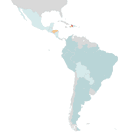
In recent decades, countries in Asia and Latin America in particular have succeeded in massively reducing their employment gaps. This success was not down to chance, but rather to institutional conditions and a number of key growth drivers.
3 min

The champions of tomorrow
Where will the next 100 million jobs be created?
By 2030, more than 100 million new jobs are expected to be created worldwide—almost 20 million per year. With around 75 million, most of these will come from Africa, driven by massive population growth and economic growth. In aging Europe, on the other hand, employment will fall by 7 million if unemployment rates remain stable.
3 min